The maritime silk road or maritime silk route refers to the maritime section of the historic silk road that connected china, southeast asia, the indian subcontinent, arabian peninsula, somalia, egypt and europe.
View Medieval China Silk Road Pictures. The silk road was and is a network of trade routes connecting the east and west, and was central to the economic, cultural, political, and religious interactions between these regions from the 2nd century. The new silk road is an enormous chinese international development project. Established when the han dynasty in even though the name silk road derives from the popularity of chinese silk among tradesmen in the roman empire and elsewhere in europe, the.
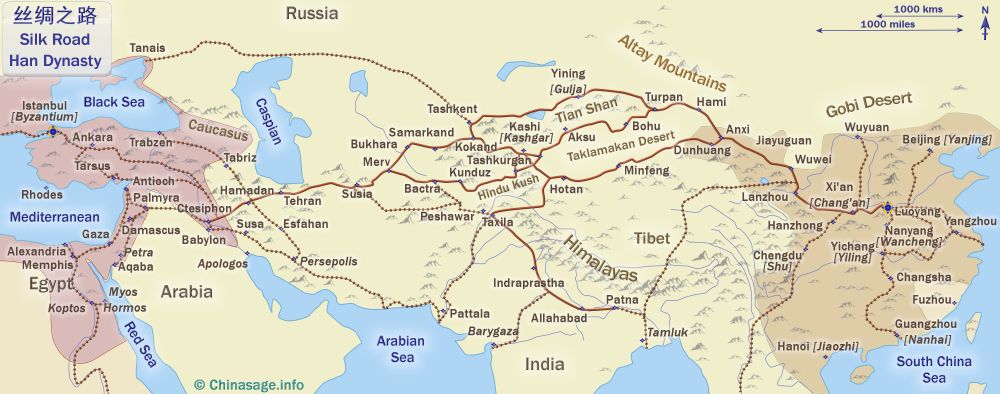
The Silk Road to China from www.chinasage.info
The first user of it is the 19th century german historical geographer ferdinand von richthofen. The silk road, or silk route, is a series of trade and cultural transmission routes that were central to cultural interaction through regions of the asian continent connecting the west and east by linking traders, merchants, pilgrims, monks, soldiers, nomads and urban dwellers from china to the. As the silk road continued to bring imports to china, gradually people in china began to make some of these things for themselves. He used the term die seiden strasse, the german equivalent. It was not actually a road.
The silk road was an extensive interconnected network of trade routes across the asian continent connecting east, south, and western asia with the mediterranean world, including north africa and europe.
The most prominent culture brought to china by the silk road from the west is religion, especially the buddhism. The silk road is the world's longest and most historically important overland trade route. The silk road was and is a network of trade routes connecting the east and west, and was central to the economic, cultural, political, and religious interactions between these regions from the 2nd century. It is a newly created term. Follow marco polo's footprints, the ancient silk road is a once in a life time journey. The silk road was a network of trade routes connecting the east and the west in ancient and medieval times. One poem calls it the golden road to samarkand. China traded lots of silk cloth to west asia and europe, in exchange for silver to make coins. The silk road has a major influence on the cultural exchange between china and the west, so it how did the compass affect trade and therefore cultural diffusion in the medieval ages? Indeed, from the chinese point of view, that was the whole point of what has come to be known as the silk road.