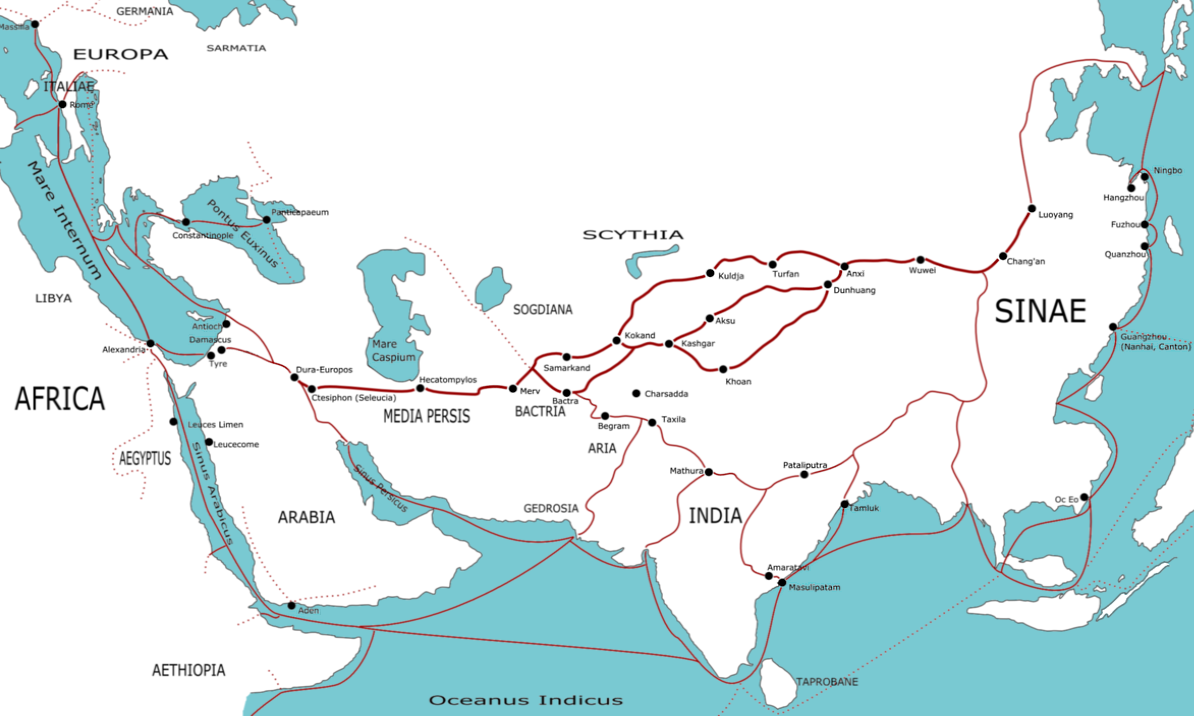
The silk road stretches more than 7,000 kilometers, connecting most lands of asia and europe.
Download The Silk Road And Arab Sea Routes Pics. Conventional histories of the silk roads stop with the european age of discovery and the opening of maritime routes to the east in the late 15th century. The silk road was and is a network of trade routes connecting the east and west, and was central to the economic, cultural, political, and religious interactions between these regions from the 2nd century. The silk road was the most enduring trade route in human history, being used for about 1,500 years.
TEA AND CARPETS: The Silk Roads Of The Sea: Dhows, Junks ... from 4.bp.blogspot.com
Location, definition, and historic context. The silk road is rising again as china builds infrastructure and travel is booming. The silk road was an extensive interconnected network of trade routes across the asian continent connecting east, south, and western asia with the mediterranean world, including north africa and europe. The actual route often changed when weather, raids, natural disasters and bandits threatened the safety of those making the journey. Brief silk road routes map silk road and arab sea route map
The spice routes, also known as maritime silk roads, is the name given to the network of sea routes that link the east with the west.
The silk road was an ancient network of trade routes, formally established during the han dynasty of china, which linked the regions of the ancient world. Adapted from martin jan mansson. The silk road was the most enduring trade route in human history, being used for about 1,500 years. The silk road also carried diseases, most notably the bubonic plague which devastated medieval europe. The chinese government believes they can greatly. The silk road was and is a network of trade routes connecting the east and west, and was central to the economic, cultural, political, and religious interactions between these regions from the 2nd century. In arab and persian households, clay pots with colorful glazes and fine white porcelain from chinese kilns were especially prized. Begun in the 2nd century b.c., the silk road carried goods, ideas, and even illness for thousands of miles between great. As the silk road was not a single thoroughfare from east to west, the term 'silk routes' has become increasingly favored by historians. The maritime silk road or maritime silk route refers to the maritime section of the historic silk road that connected china, southeast asia, the indian subcontinent, arabian peninsula, somalia, egypt and europe.